Digital ID Cards: Modern Solutions for Identity Management
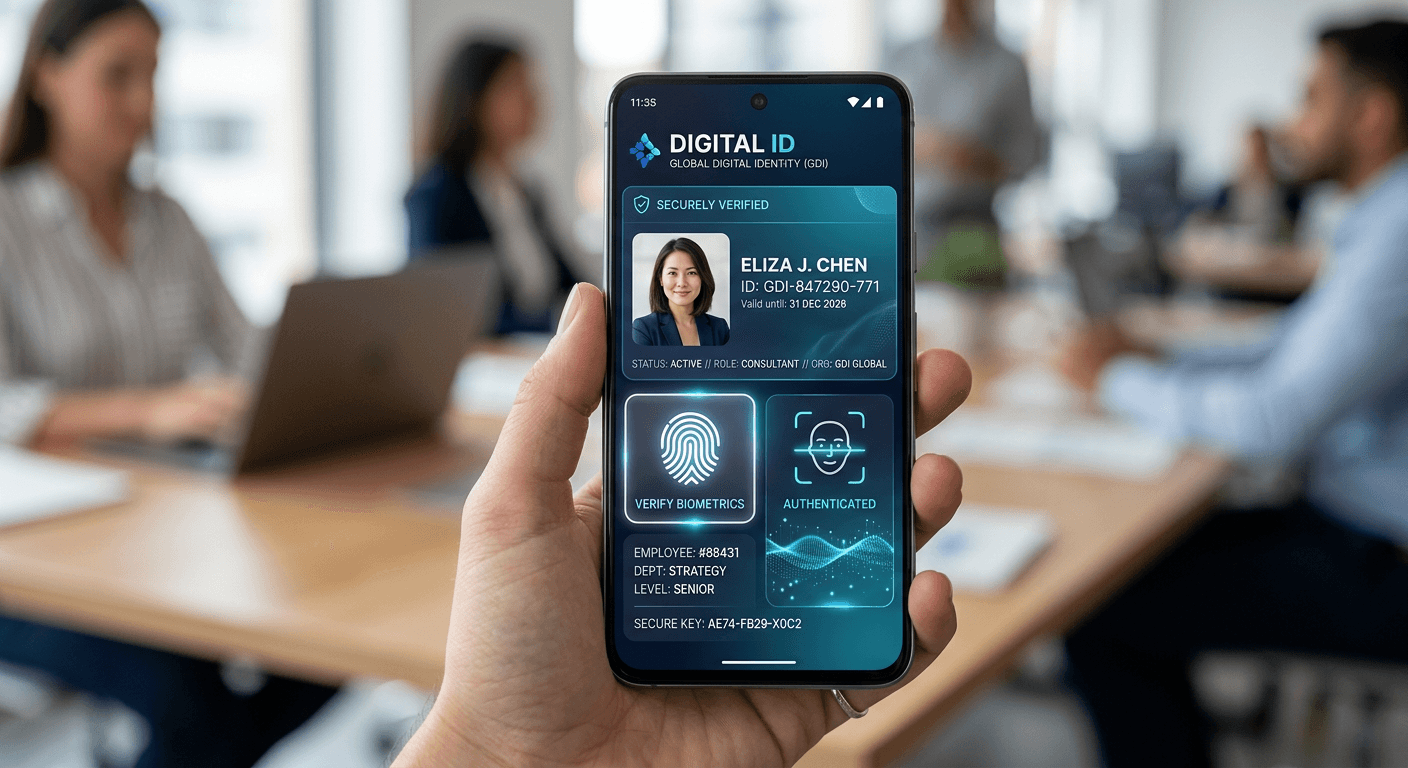
Digital ID cards are revolutionising the way individuals prove their identity and access services by replacing traditional, physical credentials with secure, encrypted electronic alternatives. These solutions leverage cryptographic technology to provide a high level of security, efficiency, and portability across both private and public sectors.
header 2
Header 3
Testing Cmd/Ctrl+Alt+2 работает
Cmd/Ctrl+Alt+3 работает
Quick Summary
Digital ID cards are secure, mobile-based identity credentials that allow individuals to verify their identity and share specific information digitally without exposing unnecessary personal data. They serve as a modern replacement for physical plastic cards, enhancing privacy and reducing the risk of identity theft through advanced encryption and authentication protocols.
- Improved security through biometric authentication and real-time verification.
- Greater privacy by allowing selective disclosure of personal attributes.
- Seamless integration with mobile wallets and existing digital infrastructure.
- Reduced reliance on physical storage and susceptibility to forgery.
Table of Contents
- Understanding the Evolution of ID Cards
- Core Technologies Behind Digital ID Cards
- Regulatory Frameworks for Digital ID Cards UK
- Security Advantages of Modern Identity Management
- Comparing Traditional Cards and Digital ID Solutions
- Real-World Implementation and User Adoption
- Frequently Asked Questions
- Recommended Reads
Understanding the Evolution of ID Cards
The transition from physical plastic documents to sophisticated digital formats represents a fundamental shift in how society approaches verification. For decades, the standard id card relied on visual inspection and rudimentary holographic security features, which are increasingly susceptible to sophisticated forgery techniques. As technology has advanced, the limitations of static physical cards have become apparent, particularly in an increasingly online-first economic landscape.
Modern identity management prioritises the ability to verify status, age, or eligibility instantly without the need for manual review. By shifting to digital platforms, organisations can ensure that credentials remain current, authenticated in real-time, and revocable if lost or compromised. This evolution reflects the broader move towards digitising essential documentation to enhance convenience for both the individual user and the service provider.
Core Technologies Behind Digital ID Cards
At the heart of any reliable digital identity system is Public Key Infrastructure (PKI) and advanced cryptography. When a user presents a digital credential, their device communicates with a backend verification service to confirm the authenticity of the data without transferring the underlying sensitive information itself. This process ensures that the entity verifying the ID receives only the confirmation of truth, rather than the data point that could lead to identity exposure.
Furthermore, many modern solutions leverage hardware-backed security modules (HSMs) within smartphones to protect private keys. By using biometric scanners - such as facial recognition or fingerprint analysis - the digital ID remains bound to the legitimate holder of the device. This provides a multi-layered security approach where possession of the physical device is combined with proof of identity, a standard feature for those who implement business identity solutions for their workforce.
Regulatory Frameworks for Digital ID Cards UK
The landscape for digital id cards UK is governed by strict compliance requirements, particularly concerning data protection and GDPR alignment. As the UK government continues to develop its framework for digital identity, the focus remains on ensuring that these systems are interoperable, inclusive, and privacy-preserving. Users expect their personal data to remain under their control, which is why developers are moving towards decentralised identity models.
Organisations looking to adopt these systems must navigate the complexities of local standards while maintaining compatibility with international digital identity frameworks. The goal is to create a trusted environment where businesses can confidently verify clients, and individuals can navigate their digital life with security. Those exploring how to guide their transition into digital identity will find that compliance with government-backed standards is the first step in successful integration.
Security Advantages of Modern Identity Management
Digital credentials offer a significant leap forward in security compared to their physical counterparts. Unlike a plastic card, which can be easily lost or stolen, a digital identity is protected by multi-factor authentication (MFA). Even if a smartphone is stolen, the attacker cannot access the digital credentials without the owner's biometric authorisation, rendering the data useless to unauthorised parties.
Pro Tip: Always ensure that your digital identity wallet is protected by a unique, strong passcode in addition to biometric locks. This 'defence-in-depth' approach ensures that your credentials remain secure even if one layer of security is compromised.
Another major advantage is the concept of 'zero-knowledge' proofs. This technology allows a user to prove they are over 18 or a valid member of a service without sharing their name, address, or date of birth. By only revealing the specific attribute required, the digital identity user significantly reduces their digital footprint, minimising the risk of data harvesting during verification processes.
Comparing Traditional Cards and Digital ID Solutions
FeatureTraditional Physical CardsModern Digital ID CardsPersistenceStatic / Fixed dataDynamic / Real-time updatesSecurityVisual inspection onlyCryptographic verificationPrivacyFull disclosure requiredSelective attribute disclosureConvenienceMust be carried physicallyStored in mobile walletRevocationImpossible until expirationImmediate remote deactivation
Real-World Implementation and User Adoption
The successful adoption of digital identity platforms depends heavily on the user experience and the ubiquity of the service. In professional environments, companies are now replacing traditional access badges with digital equivalents, which can be easily managed through a custom domain or centralised management portal. This allows for easier onboarding of contractors and temporary staff without the logistical overhead of printing physical plastic cards.
Consumer adoption is equally important. As more services, from public transport to retail purchasing, move to mobile-based authentication, the public is becoming more comfortable with the convenience of storing their identity on their phone. When users can trust the underlying system to protect their data, they are far more likely to embrace the transition to a purely digital credential format.
This is a test H2
This is a test H3
paragraph
Final Verdict
Are digital ID cards as legally binding as physical ones?
While regulations vary by region, many jurisdictions are actively updating legislation to grant digital identity credentials the same legal weight as their physical counterparts for specific use cases like age verification and office entry.
Can my digital ID be tracked by the issuer?
Robust digital identity systems are designed using privacy-first principles that ensure the issuer cannot track where or when you use your ID unless the system specifically allows for it through a decentralised ledger.
What happens if I lose my phone with my digital ID on it?
Because digital IDs are linked to your biometric authentication and protected by high-level encryption, a lost phone does not equate to a lost identity. You can typically revoke access to the credential remotely, preventing any misuse.
Can I use my existing smartphone to hold a digital ID?
Most modern smartphones with secure enclaves are fully capable of supporting digital ID functionality, provided the issuing organisation has made their credentials available for mobile wallets.