How to Evaluate Edinburgh Hair Salons and UK Barbers: 7 Service Models Compared
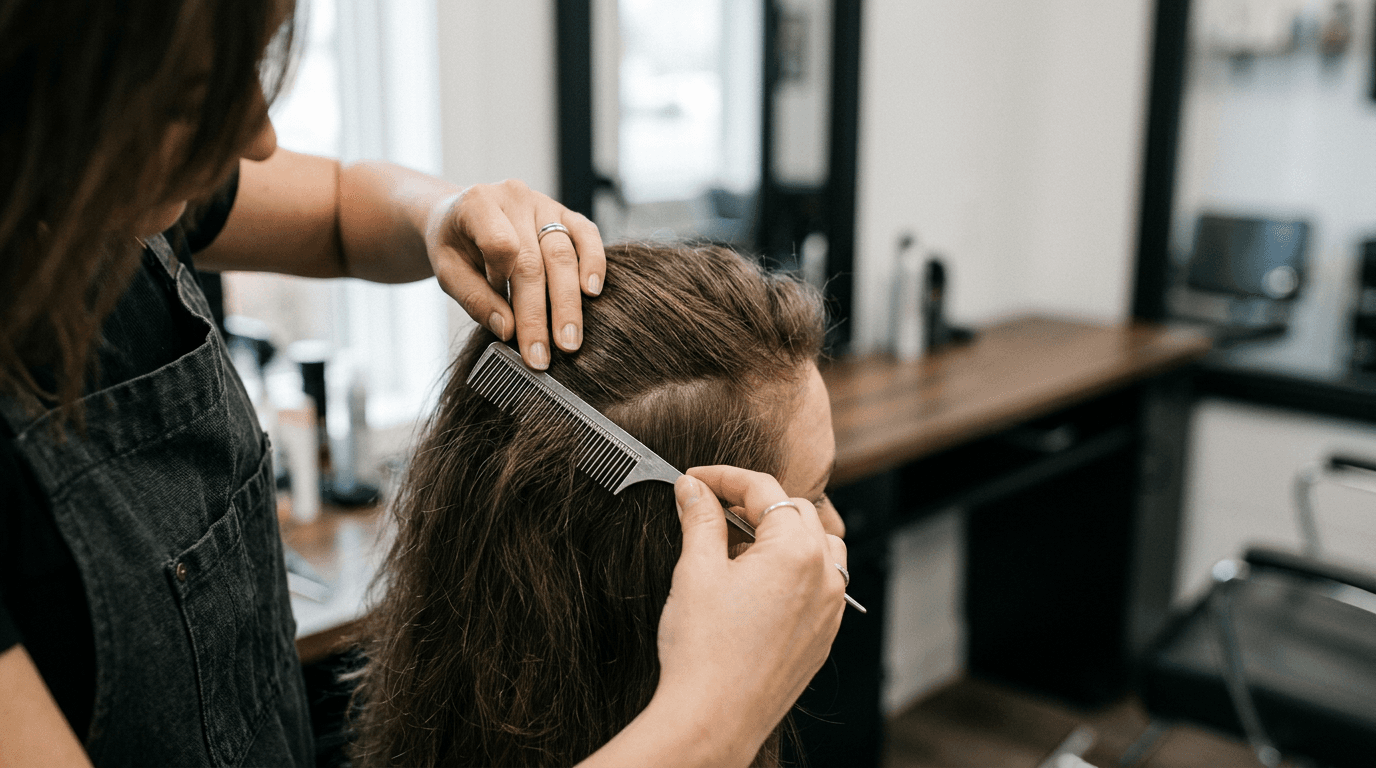
A skilled practitioner assesses your hair's natural growth pattern while it is still dry, long before the cape goes on or the water runs. If they point you straight to the basin without checking your crown's whorl, the density at your nape, or how the hair falls naturally, they are cutting blindly. Finding the right professional for your needs - whether navigating high-end edinburgh hair salons or local clipping shops - means looking past the interior design and evaluating the operational framework underneath. A great haircut requires both skilled hands and a system that respects the technical demands of the style. This guide compares seven standard service models by their technical execution and operational efficiency, the two metrics that dictate whether a professional can consistently deliver on their promises.
Quick Summary
Evaluating UK hair professionals requires assessing their operational models, technical specialities, and client management systems rather than relying purely on aesthetic marketing. Different service structures suit distinct maintenance requirements, from high-volume clipping to bespoke chemical processing.
- Independent studios prioritise detailed chemical mapping over raw client volume.
- Hybrid barbershops bridge fading precision with longer structural scissor work.
- Chair renters offer direct communication but lack control over the venue environment.
- Specialist clinics demand rigid maintenance schedules that do not suit casual clients.
Looking to promote your professional services?
A centralized link-in-bio platform helps creators and businesses manage their digital presence and social media analytics in one place.
Table of Contents
- 1. The Independent Studio: edinburgh hair salons
- 2. The Modern Hybrid Setup
- 3. The Extension and Unit Specialist
- 4. The High-Volume Express Shop
- 5. The Specialised Texture Clinic
- 6. The Freelance Chair Renter
- 7. The Mobile Session Worker
- Why your specific bottleneck dictates the model you need
- FAQ
- Recommended Reads
Comparison Table
| Service Model | Core Mechanism | Best Suited For | The Honest Limit |
|---|---|---|---|
| Independent Studio | Lengthy consultation, colour mapping | Complex chemical changes | High cost, scheduling delays |
| Hybrid Setup | Dual-track clipper and scissor work | Mid-length structured styles | Rushed weekend atmosphere |
| Extension Specialist | Structural track placement, raw sourcing | Thinning hair, extreme volume | Rigid maintenance timelines |
| Express Shop | Guard-based clipper systems | Short, simple buzz cuts | Cannot fix complex growth patterns |
| Texture Clinic | Dry-cutting, hydration mapping | Coily and wavy hair patterns | Refusal of chemical straightening |
| Chair Renter | Direct booking, personal management | Seeking a 1-to-1 relationship | No control over salon facilities |
| Mobile Worker | Portable kits, domestic integration | Bridal parties, tight schedules | Poor domestic lighting limits colour work |
1. The Independent Studio: edinburgh hair salons
Boutique spaces focusing on bespoke consultations, complete restyles, and heavy chemical processing operate on an entirely different timeline than high-street barbers. These establishments block out significant chunks of time - often three hours or more for full balayage or colour correction - to ensure every step of the lifting process is monitored. Exploring Professional Services: Finding Hair Salons and Barbershops reveals that these studios build their reputations on exhaustive preliminary testing, mapping the porosity of the hair before committing to a developer strength.
Mechanically, this model relies on segmented specialisation. You will often have your initial consultation, colour application, and final styling performed by two or even three different technicians. The business operates through centralized booking software, linking their availability directly from their social profiles so clients can secure these long appointments weeks in advance.
Superior chemical precision, vulnerable to staff turnover
This tiered, highly structured approach is the only safe way to execute massive colour transformations. The limit emerges when the specific technician who mapped your hair leaves the business. Independent salons rarely document chemical history in a way that transfers perfectly to a new stylist. If your dedicated colourist moves on, the replacement must start the porosity and lifting tests from scratch, leaving you vulnerable to inconsistent results during the transition.
2. The Modern Hybrid Setup
Bridging the historical gap between the short-back-and-sides traditionalist and the high-end salon, the modern hybrid model caters to clients who want intricate structural cutting without the three-hour time commitment. Venues that adopt a status barbershop approach implement this by mixing wet shaves and hot towel treatments with advanced sectioning and blow-drying techniques.
These venues operate on a dual-track technical system. Staff are trained to execute precision skin fades using zero-gapped clippers, but they are equally comfortable picking up texturising shears to remove weight from longer, layered styles. Consulting a Top Barbers and Hair Salons in the UK: 2026 Guide highlights that this duality is now the standard for mid-market male grooming. They utilise digital appointment slots alongside a physical waiting area for walk-ins.
Consistent structural cutting, chaotic weekend pacing
Because they blend meticulous scissor work with the traditional barbering expectation of accepting walk-in traffic, their operational model fractures on busy weekends. Staff attempt to maintain their 45-minute quality standard while managing a growing queue at the door. By Saturday afternoon, the environment becomes loud, rushed, and chaotic. Clients seeking a relaxing, quiet grooming experience will find this atmosphere jarring.
3. The Extension and Unit Specialist
Specialists dedicated entirely to hair additions, weaves, tape-ins, and wigs operate more like structural engineers than traditional stylists. This service is designed for individuals seeking transformative length, extreme volume, or protective styles for natural hair.

The mechanism here is deeply rooted in supply chain quality and precise track placement. These technicians source high-grade human materials from specific trusted suppliers, such as iseehair uk, and apply them using keratin bonds or micro-rings. The technical execution involves mathematical weight distribution: the professional must ensure that the added hair is not so heavy that it pulls the client's natural follicle out of the scalp. Every row is mapped to fall invisibly beneath the natural crown.
Transformative volume, heavy maintenance burden
While the visual results are immediately dramatic, the model dictates an unforgiving maintenance schedule. The structural bonds grow down the hair shaft as your natural hair lengthens. Clients must return strictly every four to six weeks to have the entire system removed, brushed out, and repositioned at the root. If you stretch this timeline to save money, the hair mattes at the scalp, causing severe breakage and traction alopecia. This service is fundamentally incompatible with a low-maintenance lifestyle.
4. The High-Volume Express Shop
The classic walk-in operation prioritises sheer footfall over consultation, serving clients who need immediate, predictable results without the fuss of scheduling. Places like north barbers often run on this highly standardised framework, capturing foot traffic in busy urban corridors or shopping centres.
This model is mechanically built on clipper guards rather than freehand scissor over comb techniques. The standardisation allows any cutter in the shop to deliver roughly the same fade by snapping on numbered guards in sequence. Washing basins are frequently dry or used as product storage, as the entire system is engineered for a strict 15-to-20-minute turnaround. If you read A Guide to Popular Barbershops in the UK, you will note this model dominates the entry-level market due to its predictable, high-speed output.
Practical rule: If the professional turns on the clippers before asking how you style your hair in the morning, their priority is operational speed, not structural suitability.
Unbeatable turnaround, zero customisation
The high-volume shop provides unmatched convenience for a simple buzz cut or a one-length grade. However, it systematically fails clients with complex growth patterns, prominent cowlicks, or thinning areas that require careful weight distribution. If you need scissor work longer than two inches, the guard-based mechanism these shops rely on will leave your hair blocky and unmanageable.
5. The Specialised Texture Clinic
Texture clinics cater exclusively to clients with Types 3 and 4 hair - curls, coils, and tight waves - who have historically been poorly served by standard hairdressing education. These technicians treat curly hair as a distinct material requiring entirely different handling principles.
The core mechanism is the dry-cut. Because curls shrink dramatically when dry, cutting them wet obscures the natural fall of the hair. Technicians observe the curl pattern in its natural state, mapping hydration levels and layering the hair without ever using texturising shears, which shred the curl clump and cause severe frizz. They rely on deep hydration steaming and targeted diffusing rather than tension blowouts.
Respects natural patterns, rigid styling boundaries
These clinics deliver incredible shape and health for natural curls, but they enforce strict boundaries on what they will perform. Most texture specialists refuse to execute chemical straightening, relaxing, or even traditional sleek blow-outs, arguing it compromises the integrity of their structural work. If you are someone who likes to wear your hair bone-straight every few weeks, their product lines and tools will not support your requests.
6. The Freelance Chair Renter
Rather than employing staff, many modern salons operate as landlords, renting empty chairs to self-employed stylists. This model suits clients who want a direct, one-to-one relationship with their cutter without dealing with front-desk bureaucracy.
Chair renters run micro-businesses within a shared space. They manage their own colour stock, set their own pricing, and control their own booking software. They leverage digital networking aggressively - often sharing a centralised booking link via Best Professional Business Cards 2026: Top Printing and Design Services for UK Networking directly to a client's phone. This allows them to maintain a distinct digital brand, separating their portfolio from the venue hosting them.
Highly personalised communication, inconsistent physical environment
You gain direct access to the person actually doing the work, which eliminates the miscommunications common with salon receptionists. The fatal flaw is that the renter has zero authority over the venue itself. If the salon owner neglects the plumbing, plays aggressive music, or fails to maintain cleanliness, your premium-priced stylist cannot fix it. You pay high-end rates but remain at the mercy of another owner's facility standards.
7. The Mobile Session Worker
Mobile stylists bring the service directly to the client's home, office, or hotel room. This model is built for bridal parties, high-net-worth individuals, or anyone whose schedule simply cannot accommodate travelling to a high street.
The mechanism is extreme portability. These professionals operate with condensed kit bags, portable washing basins, and highly concentrated styling products. The most organised operators rely on Exploring Popular QR Code Generator Tools to create scannable links to their portfolios, booking systems, and digital payment gateways, keeping their domestic visits entirely paperless and efficient.
Practical rule: Never book a mobile worker for a complex colour correction; domestic lighting heavily masks the subtle undertones that dictate chemical processing.
Ultimate geographical convenience, compromised technical setup
The mobile worker provides total geographical freedom but fights the client's domestic environment at every step. Low household water pressure makes washing out heavy bleach dangerous, and poor living room lighting obscures banding in complex colour work. This model is excellent for styling, dry cuts, and basic trims, but highly risky for major chemical alterations.
Why your specific bottleneck dictates the model you need
Matching yourself to a professional means identifying your primary limitation and choosing the operational framework designed to solve it.
If your bottleneck is raw time, the high-volume express shop is the obvious choice. You trade customisation for guaranteed speed. If your bottleneck is a chaotic, unpredictable schedule, a chair renter offers the direct, personal communication needed to squeeze you in after hours or adjust an appointment without a receptionist blocking the way. However, if your bottleneck is a complex chemical history - layers of old box dye, severe banding, or compromised porosity - only the independent studio will dedicate the mandatory three hours required to map, test, and safely lift the hair without destroying it.
FAQ
How do independent studios handle consultations? Consultations are typically bundled into the final time and price of the main appointment, though some high-end studios charge an upfront deposit. This deposit acts as a standalone fee covering the stylist's time for porosity tests if you decide not to proceed with the chemical work.
Can I ask a chair renter to use the main salon's products? Generally, no. Chair renters operate as separate legal entities and purchase their own inventory. Using the host salon's stock without prior arrangement violates their rental agreement.
Why do extension specialists demand in-person checks before booking? Structural additions require a precise colour match and an assessment of your root strength. A specialist cannot determine if your hair can safely support the weight of the tracks via a photograph.