How to Use a Story Generator and Other Creative Writing Tools in 2026
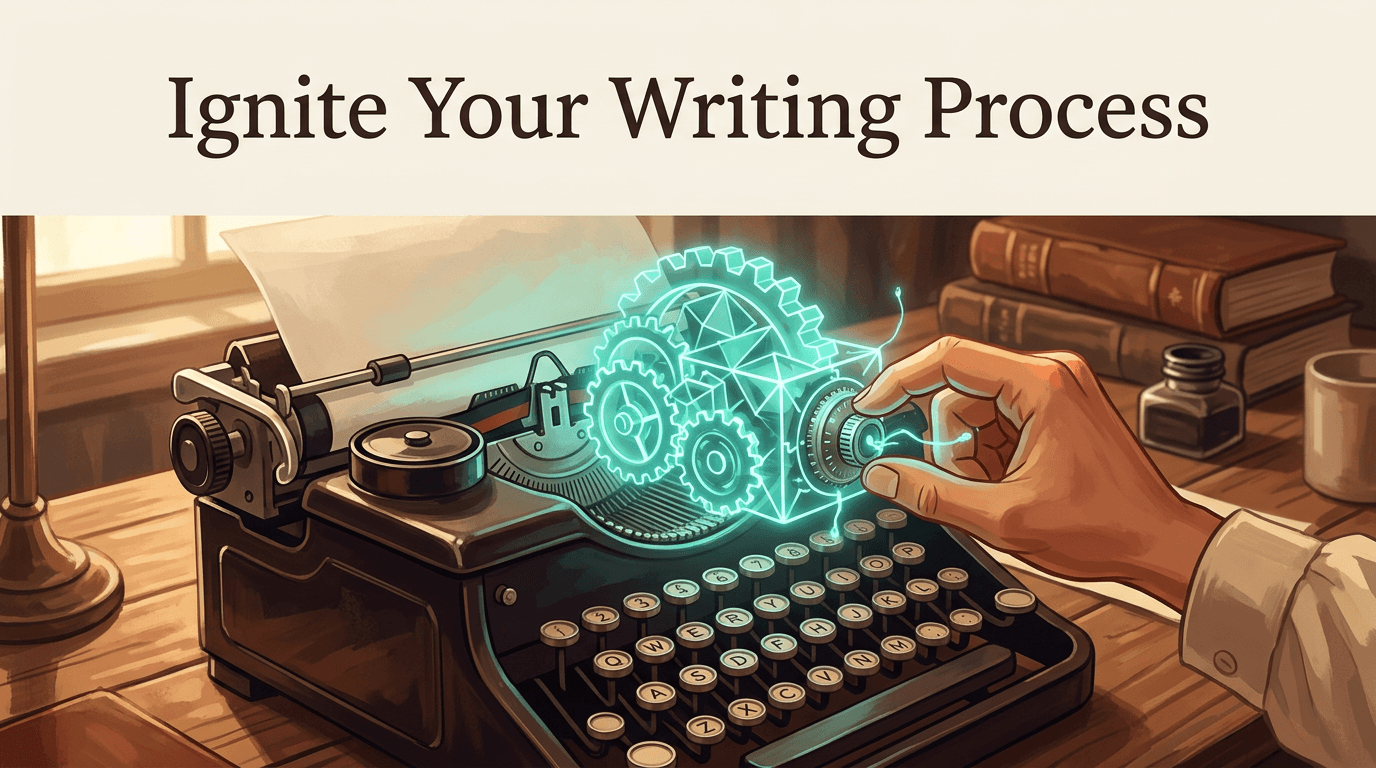
Opening a blank document and waiting for inspiration to strike is the most reliable way to write nothing at all. The cursor blinks, the deadline approaches, and the initial idea you had earlier today suddenly seems hopelessly flawed. This is the moment when practitioners turn to tools. Creative writing software, from a story generator to a lyric architect, is not designed to write the final draft for you. Instead, it is designed to break the paralysis of the blank page by forcing you to react to something concrete.
Quick Summary
A creative writing tool is an engine for generating prompts, structures, and variations to overcome writer's block. Rather than replacing human creativity, these generators serve as a starting point, offering unpredictable elements that force you out of familiar writing patterns.
- Use generators for raw material, not polished drafts.
- Set parameters loosely to allow for unexpected combinations.
- Edit ruthlessly; the value is in the reaction, not the generated output.
- Different tools serve different blocks: structure, vocabulary, or rhythm.
Struggling to manage your creative portfolio?
A centralized digital hub helps creators organise their projects and connect their audience to all published work in one location.
Table of Contents
- 1. Identify the Specific Block
- 2. Configure the Story Generator
- 3. Harvest the Output for Raw Material
- 4. Pivot to Rhythm and Rhyme
- Where the Reliance Fails
- Recommended Reads
1. Identify the Specific Block
You cannot fix a structural problem with a vocabulary tool. Before opening a generator, you must diagnose what is actually stopping you from writing. A block usually takes one of three forms: you lack a premise (the 'what if'), you lack a structure (the 'what next'), or you lack the specific language to describe a moment (the 'how').
If you have characters but no plot, you need structural prompts. If you have a concept but the sentences feel wooden, you need a language constraints tool or a random word generator to force new vocabulary into the mix. Reaching for a poem generator when you are stuck on a plot point will only produce frustrating, irrelevant output.
Practical rule: Write down the exact question you cannot answer right now (e.g., "Why is she leaving the house?"). If the tool cannot give you a specific variation on that answer, you are using the wrong tool.
The mistake people make here is treating all 'writer's block' as a single ailment. They throw a random prompt generator at a structural pacing problem, end up with a wildly creative character trait that does not move the plot forward, and conclude the tool is useless. Diagnosis must precede generation.
For more on generating unexpected concepts, see this guide on Creative Ways to Use a Random Word Generator.
2. Configure the Story Generator
A modern story generator operates on constraints. The tighter the constraints you provide, the more predictable the output. The goal at this stage is to provide just enough context to make the output relevant, but not so much that you constrain the tool into giving you back your own idea, only worse.
When setting up the tool, input your fixed elements: genre, protagonist archetype, and the specific setting. Leave the variable elements blank. If you know the story happens on a space station, lock that in. But if you do not know the antagonist's motivation, let the engine randomize it.
The mechanics rely on probability models predicting the next logical (or deliberately illogical) narrative beat based on the parameters set. If you set the "weirdness" or "creativity" temperature too low, it will output cliches. If you set it too high, it outputs nonsense.
The failure mode at this step is over-constraining. Writers who input an entire page of backstory into a prompt box are fundamentally misunderstanding the tool. You are asking the software to complete your thought rather than challenge it. The fix is to reduce the input to three bullet points: who, where, and the immediate physical action taking place.
3. Harvest the Output for Raw Material
Once the tool produces text, the work shifts from generation to curation. You are not reading for a finished paragraph; you are reading for collisions. A collision is when the generator pairs two concepts, words, or actions that you would not have naturally put together.

Read the output and immediately copy any striking phrase, unexpected plot turn, or odd character motivation into a separate document. Discard the rest. The generated text is a scaffold, and the moment it has helped you build the real sentence, the scaffold must be torn down.
The common mistake is trying to edit the generated text directly. Writers will spend an hour rewriting a generated paragraph to make it sound like their own voice. This is a waste of time and usually results in stiff, compromised prose.
You must extract the idea - the mechanism of the scene - and rewrite it entirely from scratch. If the generator suggests the detective finds a waterlogged book, take the concept of the ruined evidence and write the scene yourself. If you are struggling with names during this extraction phase, consider How to Use a Random Name Generator for Creative Projects.
4. Pivot to Rhythm and Rhyme
Not all writing is narrative. When the block is about the sound of the words rather than the meaning, you must switch tools. A lyrics generator or poem generator operates on completely different mechanics than a story engine. These tools prioritize meter, rhyme schemes, and phonetic matching over logical narrative progression.
When using a lyrics generator, you feed it a theme and a structural constraint (AABB, ABAB). The engine searches a phonetic database to produce lines that fit the rhythm. The output is often semantically weak but phonetically strong.
The application here is to use the tool to break a rhythmic rut. If every sentence you write has the same cadence, running your theme through a poem generator forces you to look at alternative sentence structures. You take the unusual rhythm it produced and map your own words onto it.
The failure here is accepting the rhyme at the expense of the meaning. A lyrics generator will often suggest a perfect rhyme that completely undermines the tone of the song or poem. The fix is to use the tool to find the vowel sounds that work, and then manually search for a better word that fits the meaning. To see how specialized these tools can get, review Creative Content Tools: Word Clouds, Poetry, and Lyrics.
Where the Reliance Fails
These tools break down entirely when tasked with emotional resonance or thematic consistency. A story generator does not understand subtext. It cannot carry a subtle metaphor across three chapters, nor can it understand the emotional weight of a callback to an earlier scene.
If you find yourself generating text to fix a scene that feels "flat" emotionally, you are using a hammer on a screw. Emotional flatness is a symptom of a character problem, not a plot mechanics problem. A generator will just give you more action, which will feel equally flat because the underlying motivation is not clear to the reader.
This workflow does not suit writers who view drafting as a purely organic, discovery-based process where every word must flow from the subconscious. If you view writing as an unbroken trance state, stopping to configure an interface will shatter your focus. These tools belong in the arsenal of the structuralist, the outliner, and the writer who treats text as material to be engineered.