Menu Engineering 2026: From Black Tap Burgers to Local Cafe Formats
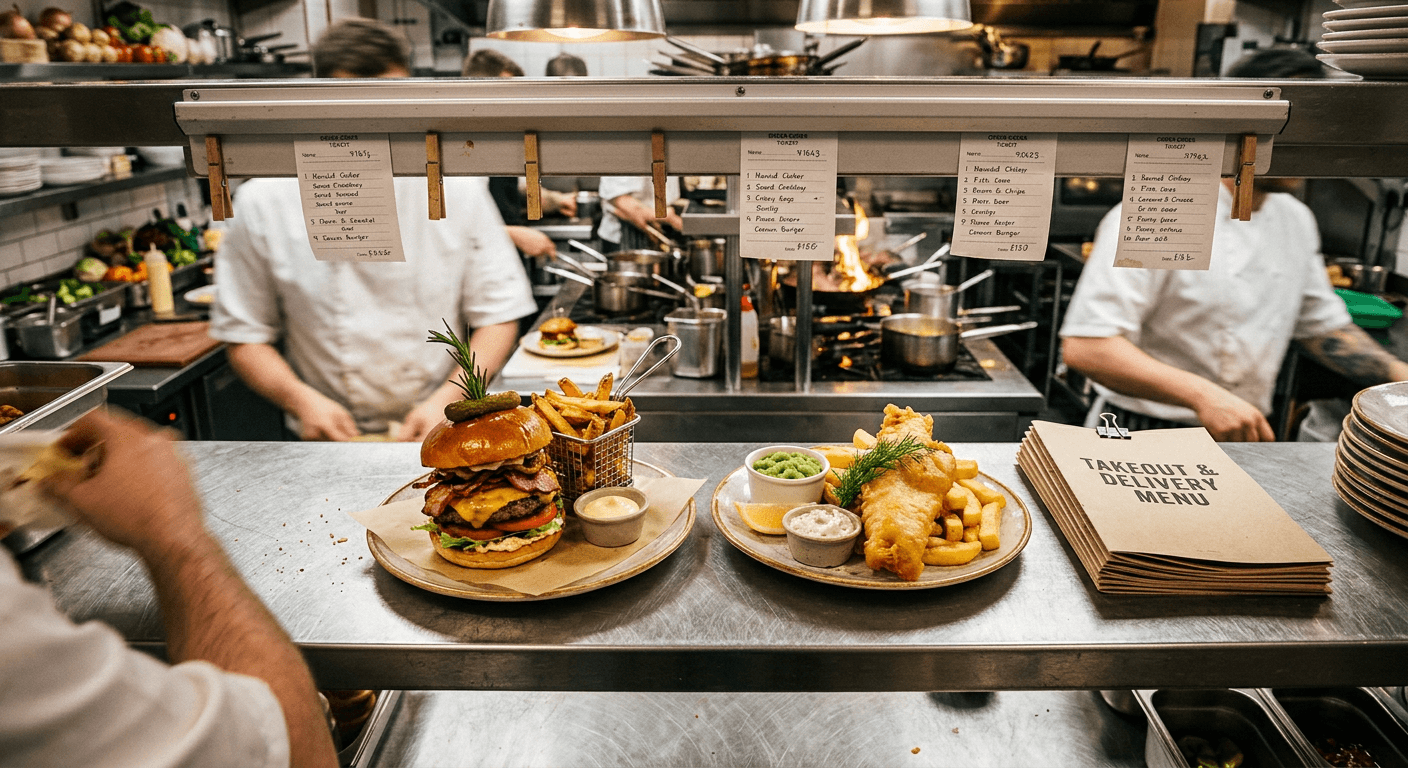
Watching a kitchen crash on a Friday night because a fourteen-page laminated menu allows 400 different order combinations is a bitter rite of passage for operations managers. The bottleneck rarely starts on the grill; it begins in the underlying design of the menu itself. Whether a venue is assembling towering black tap burgers or frying eggs in a rural cafe, every additional option multiplies inventory stress and slows down table turnover. Fixing this requires operators to stop looking at recipes and start analyzing how different venue formats structure their physical offerings to survive peak service.
Quick Summary
Menu engineering is the structural alignment of a restaurant's product offerings with its kitchen capacity, inventory limits, and target audience expectations. A poorly constructed menu bottlenecks service, while an optimised one directs diner choice toward high-margin, fast-prep items.
- Premium formats rely on visual impact but demand strict ingredient crossover.
- High-volume takeaways use matrix ordering to maintain speed.
- Fast-casual chains mask portion control behind gamified sharing dishes.
- Independent cafes survive by capping dayparts to eliminate dinner waste.
Table of Contents
- How black tap burgers dictate kitchen pacing
- 1. Premium Craft Burger Menus
- 2. The Local Pub Format
- 3. Independent Cafe Operations
- 4. Regional Takeaway Grids
- 5. Suburban Pan-Asian Hybrids
- 6. High-Volume Fast Casual Hooks
- 7. Service Station Dining Models
- Comparing Format Bottlenecks
- Matching the format to your operational reality
- FAQ
- Recommended Reads
How black tap burgers dictate kitchen pacing
The lens through which to evaluate any menu is kitchen throughput against inventory overlap. Throughput measures how many orders a line can push per minute, while inventory overlap measures how many dishes share the exact same base preparation. Every format below is judged on how effectively it balances the desire to offer broad customer choice against the unforgiving physical constraints of the cooking line and cold storage.
1. Premium Craft Burger Menus
Premium burger venues target diners willing to pay high margins for visually overwhelming, highly caloric meals. This format relies on a core menu of high-quality beef and custom buns, heavily modified with extravagant toppings like pulled pork, liquid cheese, and thick onion rings.
The mechanism behind this model is vertical stacking. Instead of expanding the kitchen footprint to cook entirely different cuisines, the line uses a small set of core proteins and relies on a wide array of pre-prepped garnishes. When you order black tap craft burgers, the grill cook is performing the exact same action as they would for a standard cheeseburger. The complexity is entirely offloaded to the expeditor or assembly station, where the visual height and structural integrity of the dish are constructed. This allows social media marketing to flourish, as venues often use resources like Curated Instagram Bio Quotes and Profile Tips for 2026 to drive aesthetic appeal without requiring a classically trained chef on the grill.
High visual impact requires strict ingredient crossover
To make this profitable, every extravagant topping must serve at least three different burgers on the menu. If a specific smoked brisket only appears on one special, it becomes a liability the moment demand fluctuates.
The format stops working the moment the assembly station lacks physical space. High-stack burgers require immense cold storage for prep-heavy garnishes. Operations with limited pass space or slow expeditors will find their hot food dying on the counter while staff struggle to pin a tower of onion rings together. If your kitchen layout forces cooks to pivot more than two steps to reach a garnish, skip this format entirely.
2. The Local Pub Format
The modern pub format is a balancing act between wet sales (alcohol) and kitchen capacity. These menus focus on familiar, hearty dishes designed to keep patrons in the building longer without requiring them to commit to a formal three-course meal.
Analysing the ilkley tap menu demonstrates how venues shift patrons from drinking to dining by keeping the barrier to entry low. The mechanism is physical proximity and pacing. Pub menus heavily front-load "small plates" and sharing boards that can be fired out of the kitchen in under eight minutes. The goal is not just to sell food, but to absorb alcohol so the customer stays for another round. Operators often deploy Exploring Popular QR Code Generator Tools to place ordering systems directly on the tables, removing the friction of queuing at a busy bar just to order chips.
Margin relies on shifting wet-led customers to dry sales
Practical rule: When converting wet sales to dry, position high-margin snacks physically above main meals on the printed layout to interrupt the customer's reading pattern.
While the margins on pub food are excellent, the honest limit is seating turnover. A group that orders a single sharing platter and sits at a prime table for four hours kills your yield. Venues without dedicated dining sections should avoid expansive hot food menus entirely, as the kitchen overhead will not be matched by the sparse, sporadic orders of drinkers who refuse to give up their seats.
3. Independent Cafe Operations
Independent daytime operations survive on tight stock management and intense local loyalty. Formats seen in venues like the broken egg cafe harleston focus aggressively on morning and early afternoon dayparts, offering variations of eggs, baked goods, and light lunches.
The core mechanism here is the hard operational cut-off. By closing at 3 PM or 4 PM, these cafes completely eliminate the overhead of an evening shift. They do not need to stock expensive dinner proteins, manage complex evening rotas, or hold an alcohol licence. Every ingredient serves the breakfast and lunch rush. To build the necessary daily repetition, these cafes often rely heavily on local loyalty mechanics, using strategies outlined in How to Create the Best Business Cards for Your Brand to distribute physical punch cards that guarantee return foot traffic.
Breakfast specialisation reduces waste but caps evening revenue
The tight focus means almost zero food waste. Bread that isn't used for toast today becomes croutons or breadcrumbs tomorrow.
The limit to this model is its absolute ceiling on revenue. You cannot squeeze dinner margins out of a breakfast service. Operators in high-rent city centre locations often find that daytime trade alone cannot cover the lease. If your location demands high monthly overheads, skipping the evening service will slowly bankrupt the business, no matter how efficient the morning shifts are.
4. Regional Takeaway Grids
The traditional regional takeaway serves a massive catchment area by offering an encyclopedic range of familiar, heavily localized dishes. These are high-volume, delivery-heavy operations where the physical menu often looks like a spreadsheet.
The underlying mechanism is matrix ordering. A glance at the lucky star neath menu reveals a numbering system that allows a single wok station to output dozens of variations from a small set of base sauces and proteins. You choose a protein (chicken, beef, prawn) and combine it with a base sauce. This means a menu listing 120 items actually only requires prep for 15 core ingredients. However, digitising these older formats reveals structural flaws. Operators migrating a double.luck menu to an online app often find that legacy pricing matrices do not map cleanly onto modern point-of-sale software, leading to mismatched inventory tracking. Furthermore, when expanding to new locations, maintaining that massive matrix becomes exponentially harder. This is why a double luck menu ripon might drop low-selling niche items entirely, stripping back the grid to streamline training for new back-of-house staff.
Matrix menus trade order speed for inventory complexity
Practical rule: If a wok station cannot clear a dish within three minutes during a Friday rush, it does not belong on a high-volume matrix menu.
By forcing the customer to build their own meal via numbers, the front-of-house avoids lengthy explanations. But the trade-off happens in the dry store, where packaging and raw ingredient par levels must be meticulously maintained to support every possible combination.
This model collapses under high staff turnover. If you do not have experienced chefs capable of holding the matrix in their heads during a peak rush, ticket times will double. Anyone lacking a deeply experienced brigade should avoid grid menus entirely and enforce a fixed, curated list.
5. Suburban Pan-Asian Hybrids
Suburban restaurants often try to capture every demographic by spanning multiple cuisines. The rainbow88 menu operates on this principle, offering pan-Asian dishes alongside localized favourites to ensure no diner in a large group vetoes the venue.
The mechanism driving this is "veto prevention". In large group bookings, the decision of where to eat is often dictated by the most restrictive eater. By offering Thai, Chinese, and Malaysian dishes under one roof, the venue ensures large parties always book. Because these menus are incredibly dense, venues often use online optimisation like Using Title and Tag Generators for Content to ensure their delivery apps correctly categorize the disparate dishes for local search visibility.
Broad geographic menus dilute kitchen expertise
While veto prevention fills large tables, it comes at a severe operational cost. A kitchen trying to execute Pad Thai, Cantonese roast duck, and Malaysian curries simultaneously requires distinct cooking stations and completely separate prep lines.
Spreading a kitchen across so many distinct dishes inevitably causes a drop in quality across the board. You cannot be exceptional at everything. This format is entirely unsuited for highly competitive urban areas where specialized, single-cuisine restaurants will easily out-cook you. It only survives in suburban catchments where convenience outranks authenticity.
6. High-Volume Fast Casual Hooks
Fast-casual chains dominate high streets by bridging the gap between fast food speed and sit-down restaurant pricing. They achieve this by standardising every single cut of meat that enters the building, leaving the customisation entirely to post-cook sauces.
The mechanical genius of this format is the illusion of variety. The wing roulette nandos serves is structurally just a mixed platter of standard stock, cooked identically to everything else on the line. The variety is applied at the very last second via different marinades or sauce flags. This means the kitchen can batch-cook huge volumes of chicken without waiting for specific orders, maintaining extraordinary throughput. Staff management in these environments often relies on rigid systems like Digital ID Cards: Modern Solutions for Identity Management to track shift rotations precisely, ensuring the batch-cooking process is never interrupted by missing personnel.
Gamified sharing items mask strict portion control
Presenting a standard bulk item as a "roulette" or sharing challenge allows the venue to charge a premium for what is essentially an off-peak inventory clearance strategy. It turns predictable portioning into a social event.
An absolute reliance on immense foot traffic restricts this model to the busiest possible locations. Because the core product is completely unvaried, the venue must churn through hundreds of covers a day just to hit break-even on prime real estate. Independent operators trying to copy this stripped-back approach often fail because they lack the marketing budget to convince locals to pay premium prices for batch-cooked protein.
7. Service Station Dining Models
Motorway service dining represents the absolute extreme of menu engineering. These venues cater to a transient, captive audience that values speed above every other metric.
The mechanism is hot-holding and zero customisation. Everything on a service station menu is designed to be assembled in under sixty seconds. The kitchen operates more like a factory assembly line than a traditional restaurant. Dishes are engineered to sit in hot-holding units without degrading, requiring incredibly precise logistical support.
Captive audience pricing relies on extreme speed of service
Because the audience has nowhere else to go, margins can be pushed higher than high-street equivalents, provided the speed of service never falters.
This format fails instantly if foot traffic drops. There is zero local loyalty; nobody drives to a service station for an anniversary dinner. Operations relying on this model face catastrophic waste if projected traffic volumes dip due to road closures or seasonal shifts. If you operate in a destination location rather than a transient thoroughfare, this industrial approach to hot-holding will ruin your reputation.
Comparing Format Bottlenecks
| Menu Format | Primary Bottleneck | Customisation Level | Best Suited For |
|---|---|---|---|
| Premium Craft Burger | Assembly speed and cold storage | High (garnish level) | High-margin, low-turnover urban sites |
| Local Pub Format | Seat turnover and dwell time | Low | Wet-led sites shifting to dry sales |
| Independent Cafe | Revenue ceiling (no evenings) | Medium | Suburban daytime catchments |
| Regional Takeaway | Inventory matrix management | High (matrix level) | Experienced brigades with delivery focus |
| Pan-Asian Hybrid | Cross-station prep complexity | Broad (cuisine level) | Large suburban group bookings |
| Fast Casual Hook | Volume requirement / Footfall | Superficial (sauces) | High-street prime real estate |
| Service Station | Logistics and hot-holding | Zero | Transient, captive audiences |
Matching the format to your operational reality
Choosing a menu format is fundamentally about choosing your problems.
If your bottleneck is kitchen space but you have strong front-of-house staff, take the fast-casual approach: standardise the cook and customise the finish at the pass. If your bottleneck is high staff turnover, avoid the takeaway matrix entirely and enforce a strict, stripped-back pub format that requires minimal training. If you lack evening footfall but have a strong local community, the independent cafe model will cut your overheads drastically. Never adopt a premium craft format unless you possess the cold storage to support it, and never attempt a pan-Asian hybrid unless you are entirely confident your prep line can handle competing cuisines simultaneously.
FAQ
Why do high-volume takeaways use numbered menus? Numbered menus allow a single wok station to process a matrix of base sauces and proteins instantly. It bypasses language barriers in the kitchen and significantly speeds up phone or front-counter ordering.
How do fast casual restaurants serve chicken so quickly? They batch-cook a standardised core protein ahead of time. The customisation (like spice levels or specific marinades) is applied post-cook at the expediting station, rather than cooking each order from scratch.
Why do independent cafes often close by 4 PM? The evening service requires different, more expensive proteins, alcohol licensing, and higher staff costs. Capping the daypart ensures zero dinner waste and keeps overheads strictly aligned with peak breakfast and lunch demand.
Can a pub survive on wet sales alone? Increasingly, no. While alcohol carries higher margins, food sales increase dwell time. Modern pubs introduce fast-prep small plates to absorb alcohol and keep groups from leaving to find dinner elsewhere.